Understanding how to improve E-E-A-T for SEO has become essential for websites that want to rank consistently in Google. Search engines increasingly prioritize trustworthy, authoritative, and experience-based content, especially after Google’s Helpful Content updates.
E-E-A-T stands for:
- Experience
- Expertise
- Authoritativeness
- Trustworthiness
These signals help Google evaluate whether your content deserves visibility, especially for sensitive topics like health, finance, and legal advice.
This guide explains how to build stronger E-E-A-T signals through expert content, trust-building pages, citations, digital PR, and authority optimization. To understand how E-E-A-T fits into the wider SEO picture, read this guide on the power of SEO in 2026.

What Is E-E-A-T and Why Google Cares About It
What Is E-E-A-T in SEO?
E-E-A-T is part of Google’s Search Quality framework used to assess content quality and trust.
It originated from the:
- Google Search Quality Rater Guidelines
Google wants to rank content created by:
- Real experts
- Trustworthy brands
- Experienced authors
- Reliable sources
This is especially important for YMYL topics.

Experience, Expertise, Authoritativeness, Trustworthiness – Explained
Experience
Google values firsthand knowledge and practical insights.
Examples:
- Product reviews from actual users
- Tutorials with real screenshots
- Case studies and experiments
Expertise
Expertise measures subject knowledge.
Examples:
- Certified professionals
- Industry specialists
- In-depth educational content
Authoritativeness
Authority reflects your reputation online.
Signals include:
- Brand mentions
- Backlinks
- Media features
- Industry recognition
Trustworthiness
Trust is the foundation of E-E-A-T.
Trust Signals for Website SEO
Important trust signals include:
- HTTPS security
- Transparent contact pages
- Privacy policies
- Accurate citations
- Positive reviews
Without trust, the other signals matter less.
How Google Evaluates E-E-A-T (Hint: It Is Not a Direct Ranking Factor)
Google E-E-A-T Guidelines 2026
E-E-A-T itself is not a single algorithmic ranking factor.
Instead, Google evaluates signals associated with:
- Content quality
- Reputation
- Accuracy
- Expertise
- User trust
Google’s systems look for patterns that indicate credibility and reliability.

How to Build E-E-A-T for Your Website
Author Pages and Bios – What to Include
Author Authority SEO
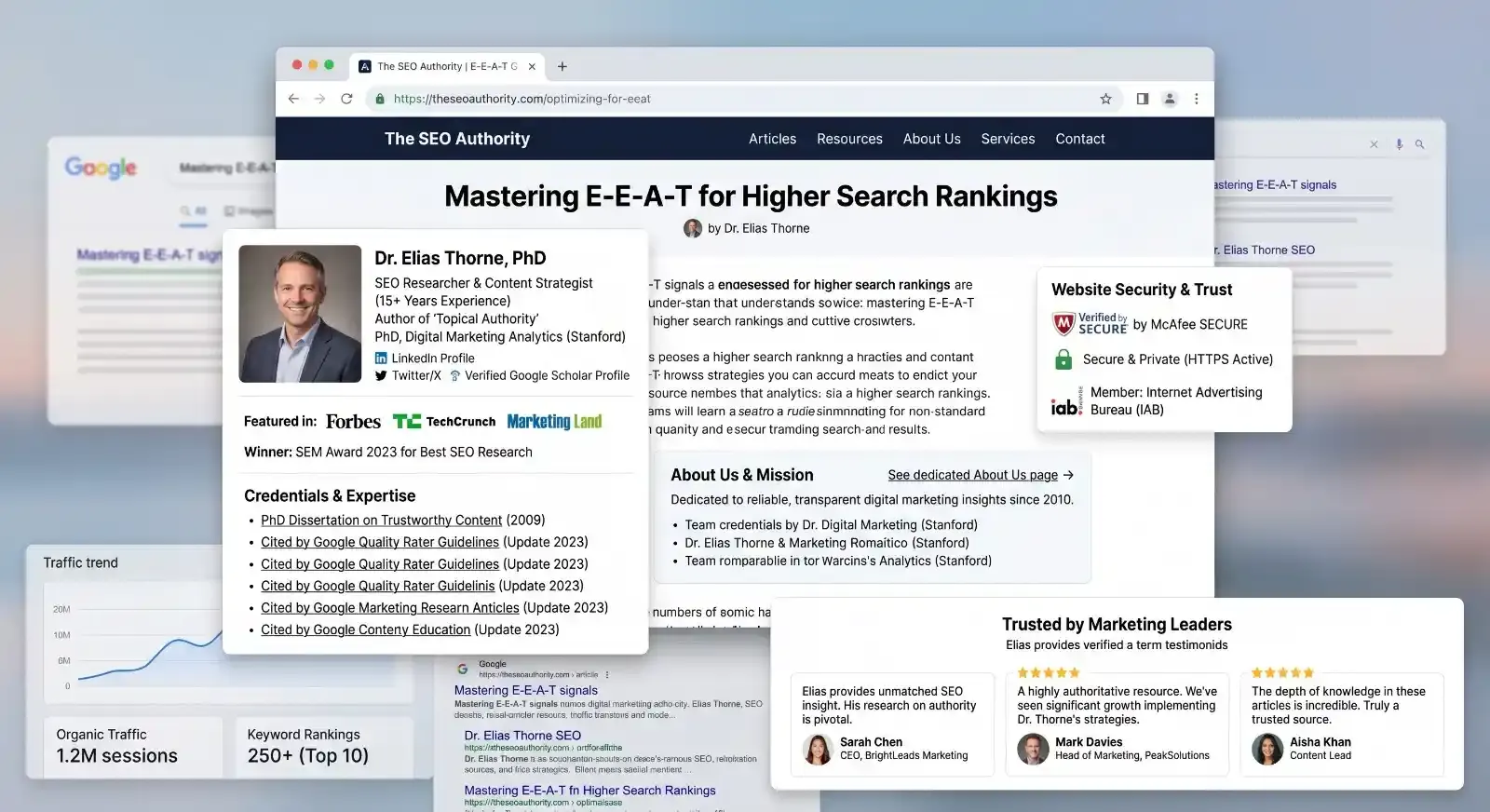
Strong author pages improve credibility significantly.
Author Bio Page SEO Best Practices
Include:
- Full name
- Credentials
- Professional experience
- Certifications
- Social profiles
- Published work
Good author pages demonstrate expertise clearly. Adding structured data to author pages strengthens these signals further. Follow this guide on how to add schema markup to WordPress to implement author and person schema correctly.

About Page Optimization for Trust
About Page Trust Signals
Your About page should explain:
- Who you are
- Your experience
- Your mission
- Your expertise
- Company background
Include:
- Team photos
- Real business information
- Awards or achievements
Transparent branding improves trustworthiness.
Citing Sources and Linking Out
Citations and Source Links
Google values accurate sourcing.
Link to:
- Research studies
- Official sources
- Industry data
- Government websites
Good citations improve:
- Credibility
- Accuracy
- User trust
Avoid unsupported claims whenever possible.
Digital PR and External Mentions
Digital PR for SEO Authority
External mentions help establish authority signals.
Examples:
- News coverage
- Podcast appearances
- Guest posts
- Interviews
- Expert roundups
These mentions strengthen your online reputation.
How Getting Featured on Other Sites Builds Your Authority
When reputable websites mention your brand, Google receives signals that your website is trustworthy and authoritative.
Benefits include:
- Brand recognition
- High-quality backlinks
- Increased trust
- Improved authority signals
Digital PR is becoming increasingly important for competitive SEO niches.
E-E-A-T for YMYL Websites — Extra Requirements
YMYL Content E-E-A-T Explained
YMYL stands for:
“Your Money or Your Life”
These include:
- Medical websites
- Financial advice
- Legal information
- Safety-related content
Google applies stricter quality standards to YMYL pages because inaccurate information can harm users.
YMYL Pages Need Stronger Signals
Important requirements:
- Verified expertise
- Accurate sourcing
- Clear authorship
- Transparent business details
- Updated information
Weak E-E-A-T can severely hurt rankings in YMYL niches.
Common E-E-A-T Mistakes That Hurt Rankings
Avoid these common mistakes:
- Anonymous authors
- Thin AI-generated content
- No citations
- Missing contact information
- Fake expertise claims
- Poor About pages
- Lack of real-world experience
- No external mentions
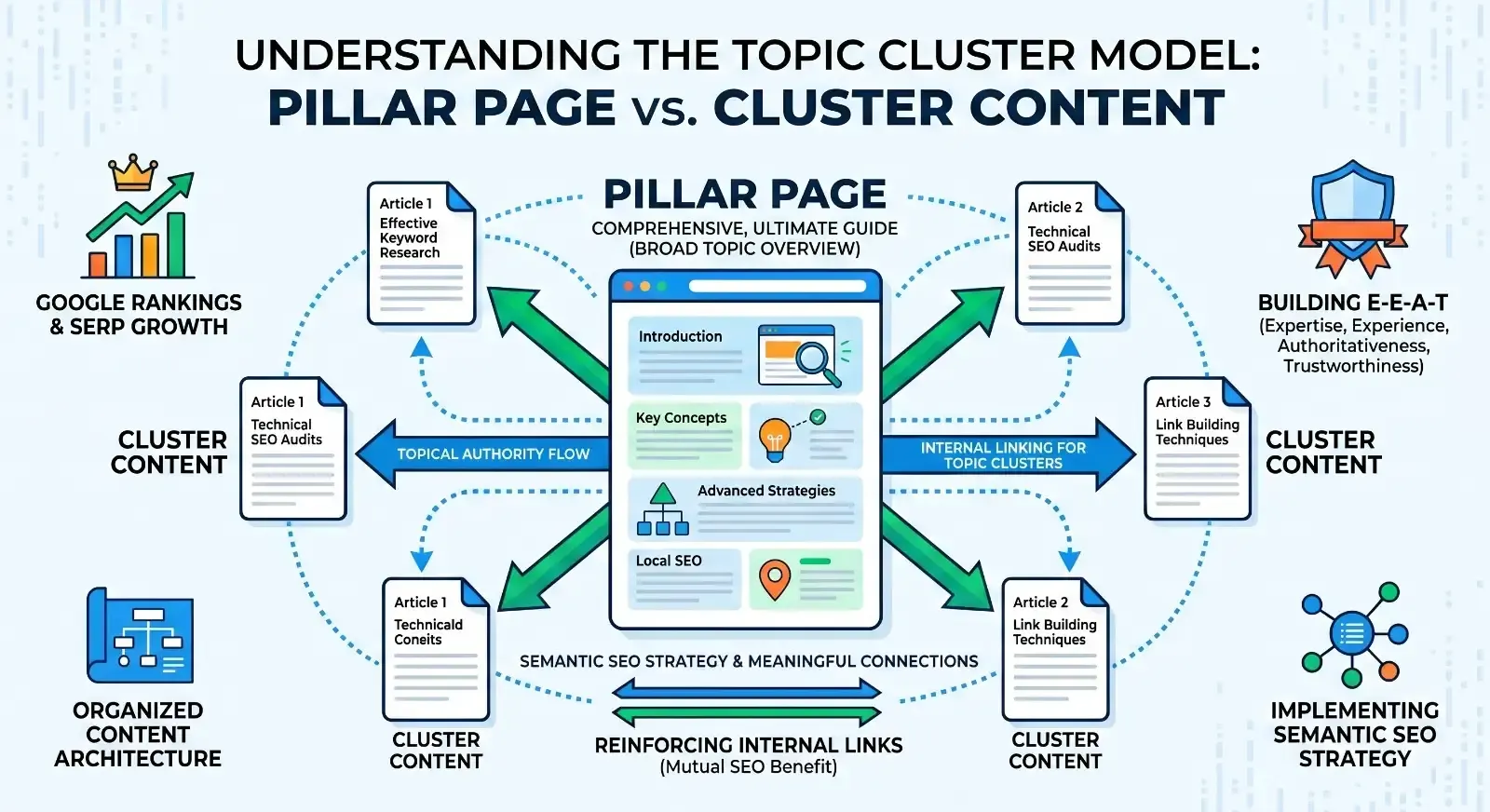
Strong E-E-A-T requires authenticity and transparency. Technical foundations also support E-E-A-T signals across your site. Run a full technical SEO audit step by step in 2026 to ensure crawlability and indexing support your trust signals. Page speed and Core Web Vitals also contribute to user trust, so follow this guide on how to improve Core Web Vitals WordPress. For on-page optimization that reinforces E-E-A-T across every article, follow the on-page SEO checklist for every article. Building a strong topic cluster architecture also deepens topical authority, so review this topic cluster strategy for SEO. A solid internal linking structure further reinforces content authority, as explained in this internal linking strategy for SEO.
Local SEO and E-E-A-T
NAP Consistency Local SEO
For local businesses, consistency matters.
NAP stands for:
- Name
- Address
- Phone number
Consistent NAP across directories improves:
- Local trust signals
- Business legitimacy
- Local search visibility
Platform-specific SEO setups also benefit from strong E-E-A-T foundations. See the WordPress SEO setup for beginners guide, the WooCommerce SEO optimization complete guide, and the Shopify SEO optimization guide 2026 to apply E-E-A-T principles across different platforms. Keyword research also supports E-E-A-T by helping you target topics where you can genuinely demonstrate expertise, so follow this guide on how to do keyword research for SEO.
FAQs
Is E-E-A-T a Google ranking factor?
How do I show Google I am an expert?
Does social media impact E-E-A-T?
Why is E-E-A-T important for SEO in 2026?
Conclusion
Learning how to improve E-E-A-T for SEO is essential for long-term ranking success in 2026. Google wants to reward websites that demonstrate real expertise, strong authority, and trustworthy information.
By improving:
- Author bios
- About pages
- Citations
- Digital PR
- Trust signals
- Expert content
you can build stronger credibility and improve your visibility across competitive search results.
E-E-A-T is no longer optional — it is one of the foundations of modern SEO success.